


Wisdom teeth are the last molars to arrive, and there is usually no room left for them. When they push against other teeth or stay trapped under the gum, they cause pain, swelling, and infection. At Luka Dental Care in London, Ontario, we plan every removal around your anatomy and take the tooth out in the way that disturbs the least bone and gum.
Wisdom teeth sit inside our wider surgical care. If a different tooth needs to come out as well, we handle that through tooth extractions. When a tooth will be replaced with an implant later, bone grafting can rebuild the ridge first. All of it sits within our oral surgery services, so complex cases stay with the same team in the same office.

A full look at all four teeth with digital X-rays and a cone beam CT scan, so you know what you are dealing with before deciding anything.
For a wisdom tooth that has already come through the gum. Usually quick, done under local anesthetic, and healed within a few days.
Surgical removal for teeth stuck under the gum or angled into the molar in front. Planned in 3D to keep clear of the nerve.
Remove all four at once and go through a single recovery instead of two. We can also do one side at a time if you prefer.
Same-day care when a wisdom tooth flares up. We keep room in the schedule for swelling, infection, and pain that will not wait.
Wisdom teeth cause trouble quietly. A tooth pressing into the molar in front can wear a hole in it long before you feel anything, and by the time it aches, the healthy tooth often needs treatment of its own. Taking the wisdom tooth out early is usually the smaller job.

Stops a wisdom tooth from damaging the healthy molar in front of it
Clears the gum pocket where food and bacteria collect behind the last tooth
Ends the swelling, jaw ache, and headaches caused by a partly erupted tooth
Removes the source of repeat infections rather than treating them again and again
Protects orthodontic work from being pushed out of line
Takes less surgery and heals faster when done before the roots finish forming

Coming in for a consult, or already booked for surgery? Here is what a wisdom teeth visit at Luka Dental Care looks like, so you know exactly what is coming.

We take digital X-rays and a cone beam CT scan to see the angle of each tooth and how close the roots sit to the nerve.
We freeze the area with local anesthetic and wait until it is fully numb. You should feel pressure, but not pain.
A tooth that has come through the gum lifts out quickly. An impacted tooth is reached through a small flap and taken out in sections.
We rinse the socket and place stitches if you need them. Many of the stitches we use dissolve on their own.
We go through eating, rinsing, and what to watch for before you leave, and you take the instructions home with you.

Dr. Rand Luka and Dr. Alyson (Aly) Kohlmeier handle wisdom teeth surgery in house, so the person who reviews your scan is the person who does the procedure. They will walk you through the plan before you sit down, explain each step as they go, and work at a pace that suits you. No referral across town, no starting over with a stranger.
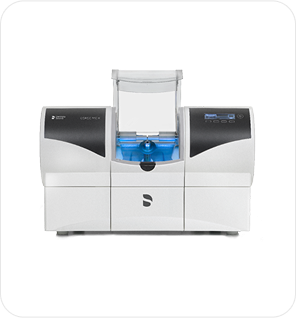
Lower wisdom teeth sit close to the nerve that supplies your lip and chin, and a flat X-ray cannot show you how close. Our cone beam CT scanner builds a 3D picture of each root and its exact distance from that nerve, so the path out is planned before we start rather than discovered along the way. Digital X-rays give sharper images at lower radiation, intraoral cameras let you see what we see, and electric handpieces keep the procedure quiet and quick. Better planning up front is what makes the surgery shorter and the recovery easier.



Experience dental care that prioritizes your comfort and well-being. Schedule your consultation now!
Most people have theirs checked in their late teens and early twenties. Roots are still short at that age and the bone is softer, so removal and healing are usually easier. There is no cut-off, though. Adults have wisdom teeth removed at every age when they cause trouble.
The area is fully numb during surgery, so you should feel pressure but not pain. Afterwards, most people manage with over-the-counter pain medication and a cold compress. Swelling usually peaks around day two and then settles.
Most people feel much better within a few days and go back to work or school quickly. A tooth that was deeply impacted takes a bit longer to settle than one that had already come through the gum. Rest on the first day, keep your head raised, and stick to soft, cool foods at the start.
No. Taking all four out in one visit means one recovery instead of two, which is why most people choose it. If you would rather do one side at a time so you can keep chewing on the other, we can plan it that way.
Some stay quiet for years, and we watch those on X-ray. Others slowly damage the molar in front of them or trap bacteria under the gum. Regular checkups tell us which one you have, so you can decide before it becomes an emergency.


